
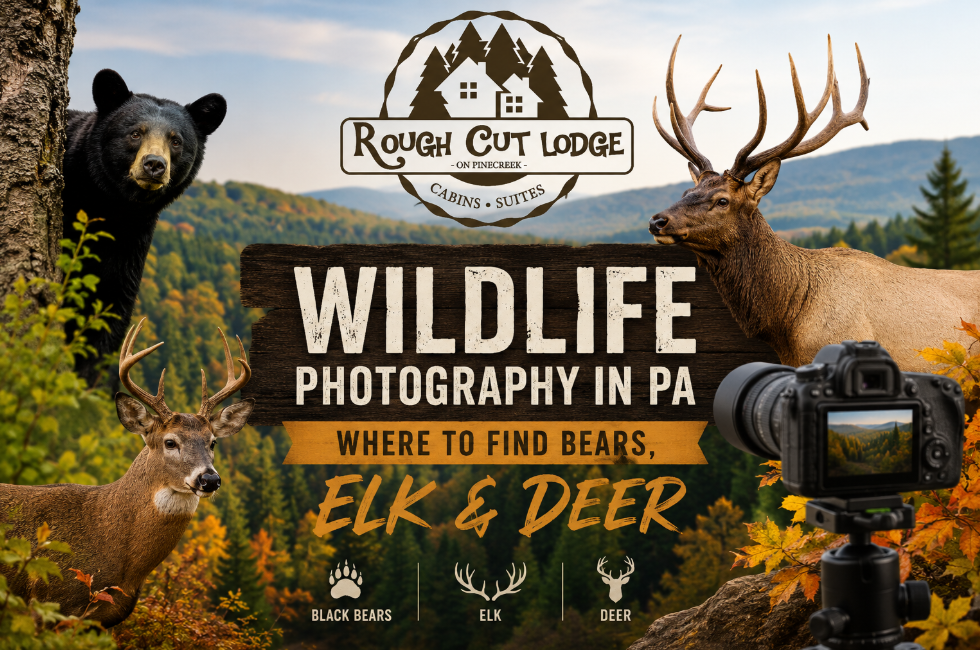
Wildlife Photography in PA: Where to Find Bears, Elk & Deer
Pennsylvania might not be the first state that comes to mind for wildlife photography, but it should be near the top of your list. With over two million acres of state forest, rolling mountains, and quiet river valleys, the Keystone State is home to thriving populations of elk, black bear, and white-tailed deer. Wildlife photography in PA rewards patience — early mornings spent waiting near a meadow edge or a quiet ridge often lead to the kind of shots you simply can’t get anywhere else. Whether you’re planning a weekend trip or a longer stay in Pennsylvania’s Canyon Country, this guide covers where to go, when to go, and how to come home with better photos.
Why Wildlife Photography in PA Is Worth the Trip
Pennsylvania’s mix of dense forest, open farmland, and river gorges creates exactly the kind of edge habitat that wildlife loves. Elk, bear, and deer all thrive where forest meets field, and the state has plenty of that terrain, especially across the north-central counties. Pennsylvania wildlife photography stands out because you don’t need to travel far from a road or trail to find animals in their natural setting. The Pennsylvania Grand Canyon and the Pine Creek Gorge area, in particular, sit in the middle of a huge stretch of public land, so you can move between overlooks, forest roads, and open meadows without covering much driving distance in a single day. Add in mild summers, colorful falls, and quiet winters, and you have a destination that changes character with every season — which means there’s always a reason to come back.
Another reason this region works so well for photographers is the sheer variety packed into a small area. Within a short drive you can go from the open elk range around Benezette to the dense hemlock forests along Pine Creek, then down to the farm fields where deer come out to graze in the evening. Most wildlife destinations ask you to pick one habitat and stick with it; Canyon Country lets you chase three very different animals without changing your home base. That’s a big part of why so many photographers keep coming back season after season, building a library of shots that spans elk in fog, bears in golden light, and deer in fresh snow.
Pennsylvania Wildlife Photography: Best Seasons and Times to Shoot
Timing matters just as much as location. Animals are most active at dawn and dusk, and certain seasons bring behaviors — like the elk rut or bears feeding heavily before winter — that make for far more dramatic photos. Here’s a quick breakdown to help you plan your trip around the right season.
| Season | Best Subject | Best Time of Day | Notes |
| Spring (Apr–May) | Deer, newborn wildlife | Early morning | Fawns and fresh green growth |
| Summer (Jun–Aug) | Deer, birds | Dawn and dusk | Warm weather, animals avoid midday heat |
| Fall (Sep–Oct) | Elk (rut season) | Sunrise and evening | Bugling elk, the single best window of the year |
| Winter (Dec–Feb) | Deer, bear tracks | Midday | Snow backdrops, fewer crowds |
If you can only make one trip, aim for late September through early October. This is when elk bugling peaks, the light turns golden earlier in the evening, and the fall colors across Canyon Country give every shot a natural, richly colored backdrop.
Best Wildlife Photography Spots in PA
Pennsylvania has no shortage of public land to explore, but a handful of spots consistently produce the best sightings and the best light. Here are the ones worth building your trip around:
- Elk Country Visitor Center (Benezette, Elk County) — the single best answer to where to see elk in Pennsylvania. Free viewing blinds and elevated platforms put you close to grazing herds without disturbing them, and staff on-site can point you toward recent sightings.
- Pine Creek Gorge / Pennsylvania Grand Canyon — deer, turkey, and occasional black bear sightings along the overlooks and gorge trails, all within easy reach of the lodge.
- Sproul State Forest — one of the state’s largest contiguous forests and a strong option for black bear photography PA trips, especially near berry patches in late summer.
- Quehanna Wild Area — remote and quiet, with good odds for both bear and elk if you’re willing to hike a little further from the road.
- Susquehannock State Forest — mixed forest and farmland habitat that’s reliable for deer and small game year-round.
If you’re wondering where to photograph deer in Pennsylvania specifically, look for the edges — the tree line bordering a hay field, a logging road cutting through the woods, or the meadows along Pine Creek at first light. Deer are creatures of habit, so once you find a field they’re using, quiet mornings there tend to pay off again and again. A 200–400mm lens, muted clothing, and a slow, downwind approach will get you far closer than trying to sneak up on them.
It’s worth building a little flexibility into your route between these spots. Weather, recent rainfall, and even hunting season dates can shift where animals are feeding on any given week, so locals and rangers at the visitor centers are often your best source for up-to-date sightings. Many photographers plan a loop that starts at Benezette before sunrise, works south through Sproul or Quehanna during midday for scouting, and ends back near Pine Creek Gorge for evening light — a route that fits comfortably into a single day trip from the lodge.
Pennsylvania Wildlife Viewing Tips for Every Skill Level
You don’t need professional gear to get great shots, but a few habits make a real difference in Pennsylvania wildlife viewing:
- Use a telephoto lens (300mm or longer) so you can stay a safe, respectful distance away.
- Arrive before sunrise — animals are most active in the first hour of daylight.
- Move slowly and stay downwind of any animal you’re photographing.
- Keep extra distance from bears and never approach a bear for a closer shot.
- Skip the bait and calls — they’re illegal in many areas and stress the animals.
- Wear muted, weather-appropriate colors and avoid anything that rustles.
- Bring a tripod or monopod for low-light dawn and dusk shooting.
- Check state forest and game land regulations before you head out.
- Above all, be patient — the best wildlife photos usually come after a long, quiet wait.
A short packing list goes a long way here too. Along with your camera and lenses, bring binoculars for scouting before you set up a shot, extra batteries (cold mornings drain them fast), a rain cover, and layered clothing you can adjust as the temperature swings between dawn and midday. A comfortable pair of waterproof boots matters more than most people expect — the best vantage points are rarely the ones right next to the parking area.
Plan Your Wildlife Photography Getaway
A good trip needs a good base camp, and that’s where Rough Cut Lodge comes in. Tucked along the banks of Pine Creek in the heart of Canyon Country, our log cabins and suites put you within easy reach of the Pennsylvania Grand Canyon, Wellsboro, and the forests and game lands covered in this guide. After a long morning in the field, there’s nothing better than warming up by the fire, reviewing the day’s photos, and planning tomorrow’s route — all from a cabin surrounded by the same mountains you’ve been photographing. Early risers will appreciate that a hot cup of coffee and a warm cabin are only minutes from some of the best dawn light in the region, so you’re never stuck driving an hour in the dark just to reach your first shooting spot. Rough Cut Lodge also manages rustic properties across Union, Centre, and Clearfield counties in Pennsylvania, and in McHenry and Oakland, Maryland, so there’s a comfortable option close to wherever your next shoot takes you.
▶ Book Your Cabin at Rough Cut Lodge
▶ Check Availability & Plan Your Trip
Pennsylvania’s wild spaces reward the photographers who show up early, stay quiet, and put in the time. Whether you’re chasing that perfect shot of a bugling elk, a black bear at the forest edge, or a deer stepping out of the morning mist, Canyon Country has the habitat, the seasons, and now the basecamp to make it happen. Pack your camera, plan around the seasons above, and we’ll see you on the trail.

No responses yet